
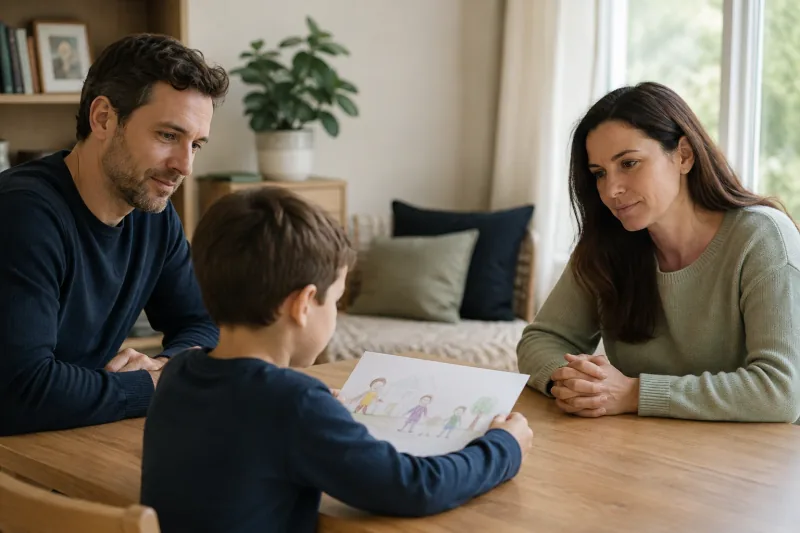
When a child begins refusing visits or withdrawing from a parent after separation, it can be confusing and painful. One parent may suspect interference, while the other believes they are responding to the child’s distress.
Understanding why the relationship has changed is essential. Ontario courts consider the evidence, the child’s experiences, and what arrangements will best protect their safety and well-being.[1]
What Is Parental Alienation?
Parental alienation refers to a breakdown in a child’s relationship with a parent where the other parent’s influence helps explain the rejection, rather than the rejected parent’s own conduct. The concern is that the child is being drawn into the parents’ conflict and losing a relationship without adequate reason.[2][3]
However, a child refusing contact does not, by itself, establish alienation. Children may resist spending time with a parent for several reasons. Understanding the problem requires consideration of both parents’ behaviour and the child’s own experiences.[2]
What Parental Alienation Is Not
Children may resist contact because of abuse, neglect, frightening behaviour, poor parenting, or other difficult experiences within the relationship.
Taking reasonable steps to protect a child from harm should not automatically be characterized as alienation. Nor does a child’s preference for one household necessarily mean someone has influenced them.
What Behaviours May Raise Concerns?
Depending on the circumstances, concerning behaviour from a parent may include:
- Repeatedly criticizing or belittling the other parent in front of the child.
- Pressuring the child to show loyalty to one parent by rejecting affection or contact with the other.[3]
- Interfering with scheduled visits or communication without a sound reason.
- Sharing adult disputes with the child or encouraging them to take sides.
- Undermining the other parent’s role in the child’s life.[3]
These behaviours must be considered in context, including their frequency and effect on the child. An isolated disagreement or missed visit does not, in itself, establish parental alienation.[2]
What Are the Key Questions?
A careful assessment should explore:
- What has changed? Consider the history of the child’s relationship with each parent.
- What has each parent actually done? Specific events and communications.
- Why is the child resisting contact? Their experiences, concerns, and explanations matter.
- Are there safety issues? Family violence and controlling behaviour must be considered.
- What response would help this child? Different families may need very different solutions.[1][2]
These are practical questions, rather than a checklist that automatically proves alienation.
What Are Ontario Courts Saying?
Ontario decisions show that serious alienating behaviour can lead to significant changes in parenting arrangements. They also show why the response must fit the individual child.
See, for example, A.M. v. C.H., 2019 ONCA 764, and Y.H.P. v. J.N., 2023 ONSC 5766.[4][5]
Do Children’s Wishes Still Matter?
Yes. Chyher v. Al Jaboury, 2025 ONSC 998, illustrates why children’s evolving needs and views remain important. A finding of alienation does not automatically erase a child’s voice or dictate a particular parenting schedule.[6]
The Child’s Best Interest Comes First
Under both the federal Divorce Act and Ontario’s Children’s Law Reform Act, courts give primary consideration to the child’s “physical, emotional and psychological safety, security and well-being.”[1]
Courts examine the child’s needs and relationships, each parent’s willingness to support the child’s relationship with the other parent, and any family violence. Children’s views receive weight according to their age and maturity. There is no automatic entitlement to equal parenting time.[1]
What Evidence and Practical Steps Can Help?
Clear, factual records can help a lawyer understand what is happening. Relevant information may include missed parenting time, communications between parents, and observations from professionals familiar with the family.[7] Avoid asking children to gather evidence or take sides.
Why Choose HCLS?
Whether you are concerned about interference with your relationship with your child or responding to an allegation of alienation, understanding your options can help you move forward.
At Home Counsel Legal Services (HCLS), we can help you organize relevant information, understand existing parenting orders, and assess appropriate next steps.
Our approach keeps your child’s needs and safety at the centre of the discussion. Contact HCLS to discuss your situation and the support available to you.
Footnotes
-
Divorce Act, R.S.C. 1985, c. 3 (2nd Supp.), ss. 16(1)–(4) and 16(6); Children’s Law Reform Act, R.S.O. 1990, c. C.12, s. 24. These provisions address the child’s best interests, safety, views and preferences, family violence, and parenting time. ↩ ↩2 ↩3 ↩4
-
Department of Justice Canada, HELP Toolkit: Identifying and Responding to Family Violence for Family Law Legal Advisers, “Tab #15: Rejection of a Parent by a Child”. Discusses the different reasons children may resist contact and the importance of examining family violence and the child’s experiences. ↩ ↩2 ↩3 ↩4
-
Y.H.P. v. J.N., 2023 ONSC 5766, paras. 31–38; Chyher v. Al Jaboury, 2025 ONSC 998, para. 57. Discuss indicators of alienation and evidence of conduct undermining a parent-child relationship. ↩ ↩2 ↩3
-
A.M. v. C.H., 2019 ONCA 764, paras. 33–39. Addresses the evidence supporting a change in parenting arrangements and the child’s long-term best interest. ↩
-
Y.H.P. v. J.N., 2023 ONSC 5766, paras. 21–28, 88–92. Addresses the heightened threshold for temporarily changing a final parenting order and the specific relief ordered. ↩
-
Chyher v. Al Jaboury, 2025 ONSC 998, paras. 104–108. Addresses the teenagers’ maturity, expressed preferences, and the parenting arrangement appropriate to their circumstances. ↩
-
Chyher v. Al Jaboury, 2025 ONSC 998, paras. 57 and 102–104; Y.H.P. v. J.N., 2023 ONSC 5766, paras. 29–30. Illustrate the use of communications, professional evidence, and observations of changes in the child-parent relationship. ↩